

Research Areas
Against the strategic backdrop of achieving carbon neutrality, the development of hydrogen energy has become an inevitable choice for global energy transformation and low-carbon upgrading. Our research group focuses on the frontier of green, low-carbon and clean energy technologies, and has long been dedicated to the fundamental research, technological development and engineering application of hydrogen energy production and utilization. We have formed a systematic and distinctive research layout covering the whole chain of hydrogen energy, with core research directions as follows:
· Nanocatalytic materials and surface electrochemistry
· Electrocatalysis, water electrolysis and fuel cell technologies
· Renewable energy-driven hydrogen production: materials, devices and integrated systems
· Key research and development contents include: membrane electrodes, diffusion layers and bipolar plates for PEM & AEM water electrolysis; ordered Pt-based low-noble metal and non-noble metal catalysts as well as matching electrodes for PEM fuel cells; megawatt-class solid oxide water electrolysis hydrogen production equipment and core technologies; performance evaluation and testing of water electrolysis and fuel cell materials, components and devices.
·Photocatalytic water splitting for hydrogen production and photocatalytic CO₂ reduction for fuel synthesis
In terms of research foundation and methodology, the laboratory carries out in-depth fundamental research spanning nanochemistry, materials science, heat and mass transfer and other interdisciplinary fields. We focus on the technological innovation and industrialization application of renewable hydrogen production and low-carbon fuel synthesis, covering proton exchange membrane (PEM) water electrolysis, anion exchange membrane (AEM) water electrolysis, advanced fuel cells, wind-solar hybrid water electrolysis coupling systems, biomass and its derivatives catalytic reforming, photocatalytic water splitting and other core technologies.
The team integrates experimental characterization with multi-scale numerical simulation methods, including quantum chemistry calculation, chemical reaction kinetics and fluid dynamics simulation. Relying on this technical system, we develop key components, core devices and integrated systems for the hydrogen energy industry such as renewable hydrogen production and fuel cells, laying a solid theoretical and technological foundation for the large-scale application of hydrogen energy and fuel cell technologies in the future. To date, the team has filed more than 30 invention patents, with 18 patents granted.
In recent years, the team has undertaken and participated in more than 30 national, provincial and ministerial-level scientific research projects, covering the National Natural Science Foundation of China, National 863 Key Program, projects supported by the National Development and Reform Commission, Guangdong Natural Science Foundation for Research Teams, Key Field Breakthrough Projects of Guangdong Province, Key Research and Development Project of Anhui Province, Pilot Projects, Strategic Priority Research Program and STS Project of the Chinese Academy of Sciences, and other high-level scientific research tasks.
The team currently has 6 permanent researchers, all holding doctoral degrees, including 1 professor, 2 associate professors, and 3 members with overseas research and study experience. Our disciplinary layout covers electrochemical engineering, engineering thermophysics, chemical engineering, polymer materials, materials engineering and other multidisciplinary fields, realizing the cross-integration of basic research and engineering application.
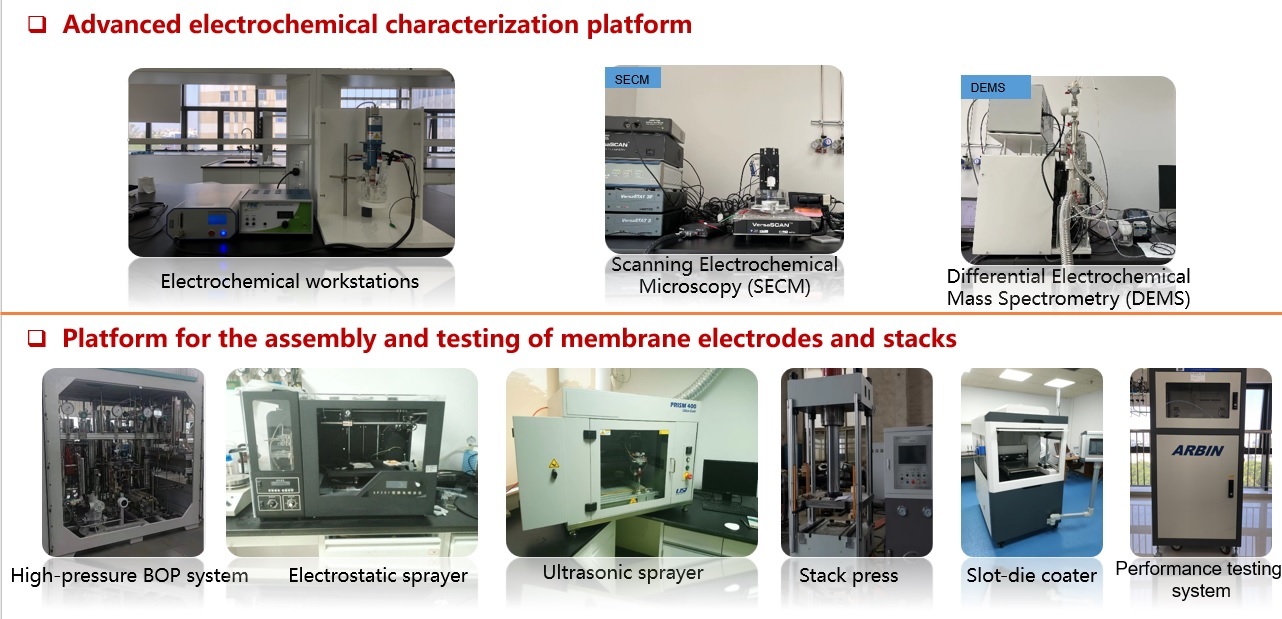
The laboratory has built a comprehensive and advanced research platform to support the whole process of research and development: an advanced electrochemical characterization platform equipped with electrochemical workstations, scanning electrochemical microscopy (SECM), differential electrochemical mass spectrometry (DEMS) and other precision instruments; a complete set of platforms for MEA preparation (equipped with ultrasonic sprayer, slot-die coater), stack assembly (120 t stack press) and performance testing. These hardware facilities provide solid and reliable support for the smooth progress of relevant fundamental research and technological development.
Key Research Areas
·Hydrogen Production; water electrolysis
·Catalysis
· Fuel Cell
· Electrochemical Cell Design and Architecture
·Renewable Hydrogen and Hydrogen-based E-Fuels
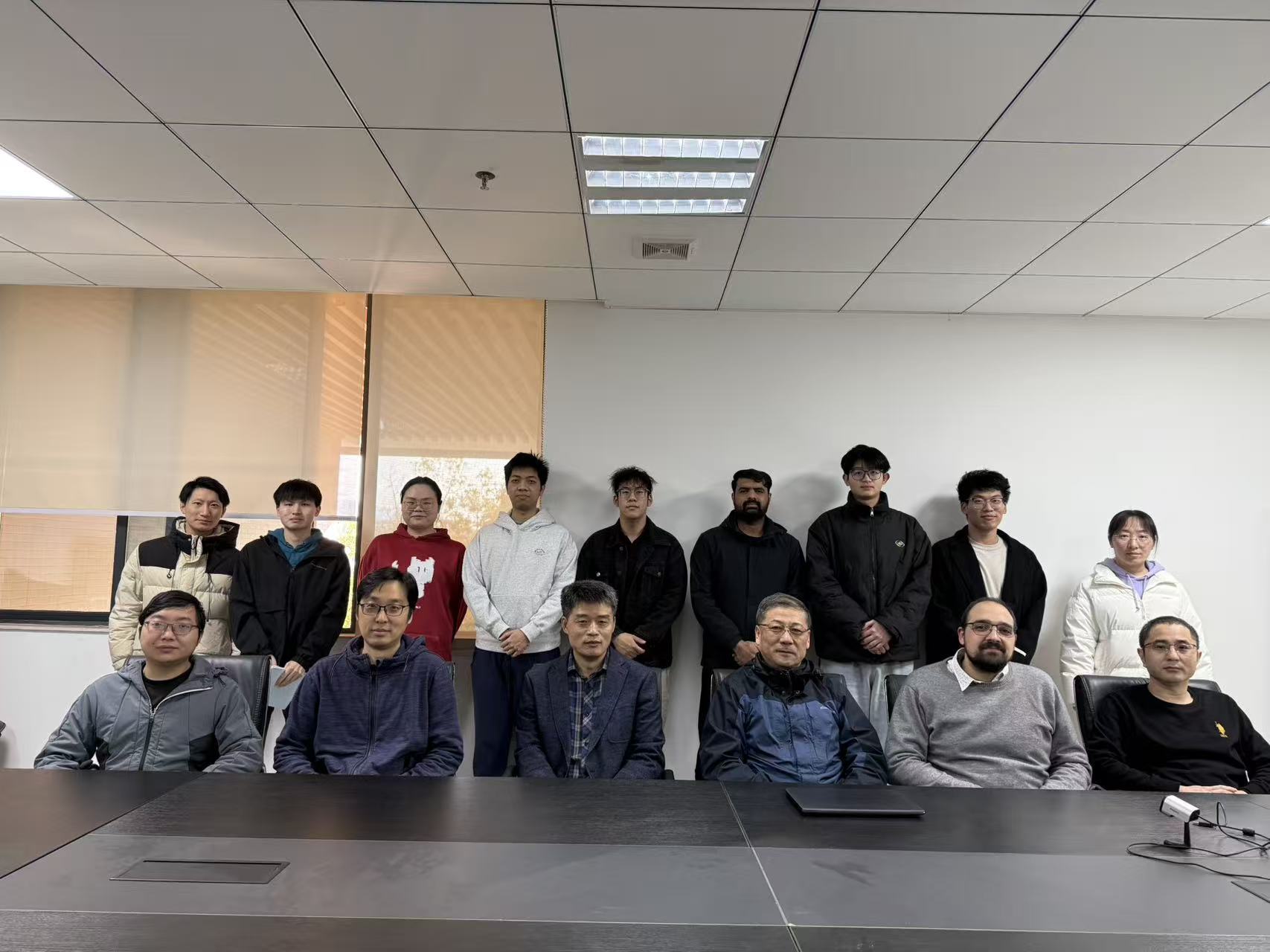
Core Researchers
·GUO Changqing, Team Leader
· WANG Zhida
· SHI Yan
· LU Zhuoxin
·SHEN Lisha
Key Research Platforms & Facilities
· Electrochemical Workstations
· Scanning Electrochemical Microscopy (SECM)
· Differential Electrochemical Mass Spectrometry (DEMS)
·1kW and 100W Arbin Fuel Cell Test System
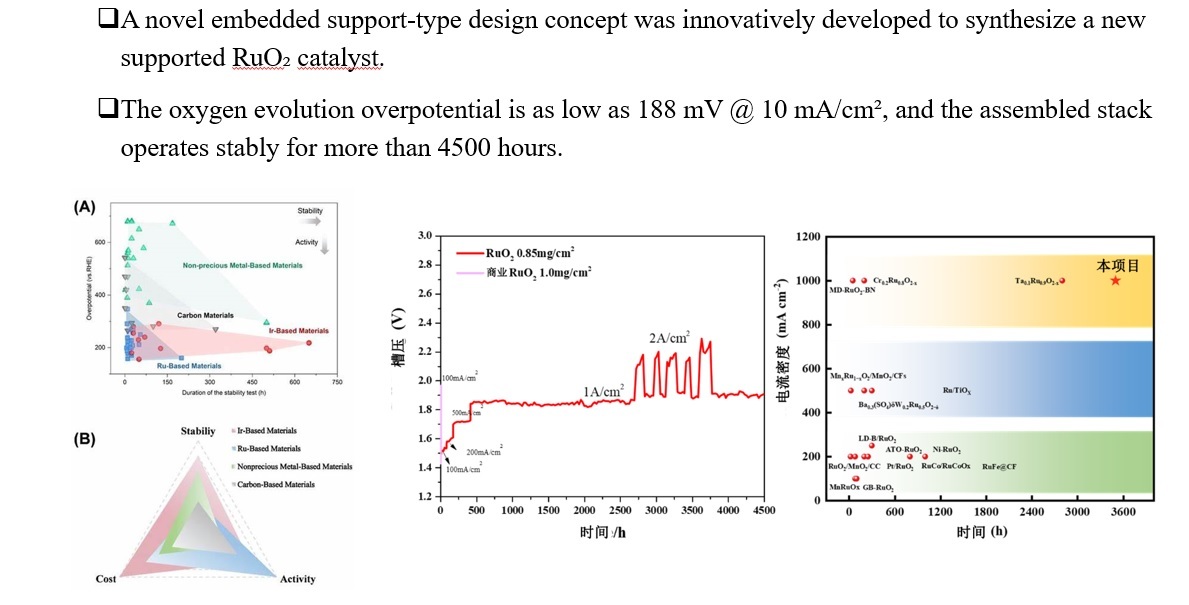
Signature Achievements
· To address the high cost and limited reserves of iridium (Ir), a precious metal commonly used in oxygen evolution reaction (OER) catalysts, the team has developed a series of low‑iridium and iridium‑free catalytic materials. Notably, the newly developed iridium‑free catalyst has demonstrated stable operation for more than 5000 hours at a high current density of 1–2 A/cm², achieving an internationally leading performance level.
· In the development of membrane electrode assemblies (MEAs), more than 10 patented technologies have been adopted for catalyst‑coated membrane (CCM) preparation and structural optimization, successfully reducing the precious metal loading to as low as 0.1 mg/cm².
·The as‑prepared integrated composite electrode exhibits a degradation rate of less than 4 μV/h in a 4000‑hour continuous durability test, which essentially meets the 2030 technical target set by the U.S. Department of Energy (DOE) and satisfies the 20‑year service life requirement for wind and solar power generation systems.
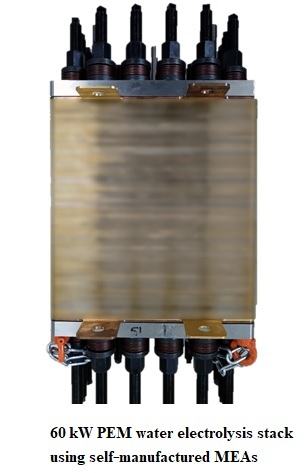
·Furthermore, the team has successfully developed a 60 kW‑class proton exchange membrane (PEM) water electrolysis stack, which has been delivered to customers with outstanding performance and stability. The team is fully capable of designing and manufacturing MW‑class water electrolyzers.
International Collaboration
Committed to an internationalized and open research strategy, the team centers its efforts on core cutting-edge fields including proton exchange membrane (PEM) and anion exchange membrane (AEM) water electrolysis for hydrogen production. It has forged long-term, stable and in-depth cooperative partnerships with world-renowned universities and research institutes across the globe, such as the University of British Columbia (UBC) and the University of Waterloo in Canada, Northeastern University in the United States, the Italian National Agency for New Technologies, Energy and Sustainable Economic Development (ENEA), and the Agency for Science, Technology and Research (A*STAR) in Singapore.
To date, the team has jointly published more than 30 high-level academic papers with overseas partners, secured a host of internationally competitive scientific and technological achievements, and built a three-dimensional collaborative model featuring "academic exchanges, joint research and personnel mutual visits". This comprehensive cooperation framework has effectively elevated the team’s international academic influence and core technological competitiveness in the green hydrogen sector.
The team has established a normalized academic exchange mechanism, holding regular online and offline seminars and arranging reciprocal personnel visits with all overseas cooperative entities to facilitate in-depth communication. It has participated in organizing and hosting high-profile international academic events, including the 2019 Materials Research Society (MRS) Low-Temperature Electrolysis Session in the United States and the 5th World Hydrogen Technologies Convention (WHTC). Core team members have been invited to deliver keynote speeches at numerous international conferences on multiple occasions, sharing the latest research progress in hydrogen production via water electrolysis, catalyst development and other related fields, and promoting the collision and integration of cutting-edge academic concepts and advanced technologies worldwide.
Focusing on the prominent technical bottlenecks restricting the industrialization of green hydrogen production, the team carries out substantive and result-oriented collaborative research with overseas partners. Specifically, it has joined hands with Northeastern University in the United States to tackle key technical problems in the research and development of oxygen evolution reaction (OER) catalysts and membrane electrodes, which are core components of water electrolyzers. Meanwhile, the team has cooperated with Italy’s ENEA to develop energy-saving and high-efficiency technologies for the ferroalloy industry, expanding the application scenarios of green energy technologies.
Drawing on the advanced talent training models of top overseas universities and research institutions, the team promotes two-way personnel exchanges and joint training programs for graduate students and academic scholars. Two core team members have completed academic visits and research exchanges at the University of British Columbia (UBC) in Canada. In turn, Professor Xiaotao Bi, a Fellow of the Canadian Academy of Engineering from UBC, has been appointed as a visiting researcher of the team and has visited China multiple times to provide on-site academic guidance and technical advice.
Furthermore, the team has invited distinguished scholars from multiple countries to conduct in-depth cooperative research in China, including Senior Research Professor Jayasundara Bandara from the National Institute of Fundamental Studies in Sri Lanka, Professor Mohammad Zhiani from Tarbiat Modares University (TMU) in Iran, and Dr. Tauseef Munawar from the Islamia University of Bahawalpur in Pakistan. To date, the team has admitted and supervised a total of 6 overseas master’s and doctoral students, significantly enhancing the team’s overall internationalization level and building a diversified academic talent pool.
The team has cultivated an open, inclusive and dynamic academic research ecosystem. Leveraging its mature and extensive international cooperation network, the team looks forward to further deepening all-round cooperation with peers, research institutions and industrial partners from all over the world. We aim to jointly promote core technological breakthroughs in the global energy transition field, share scientific research achievements and industrialization experience, and achieve mutual benefit and win-win results. Ultimately, we will strive to contribute solid technical support and academic wisdom to the high-quality and sustainable development of the global green hydrogen industry.
Contact Name: GUO Changqing
Contact Number: +86 020-37246316/15818198386
Contact Email: guocq@ms.giec.ac.cn