

Scientists
About
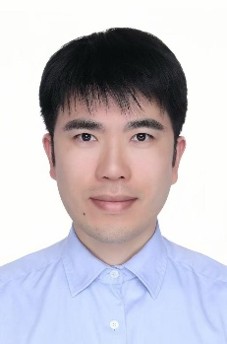
QIAO Qingyao currently is a full professor from Guangzhou Institute of Energy Conversion (GIEC), Chinese Academy of Sciences (CAS). He obtained his MSc in Civil Engineering from Shenzhen University in 2018, and PhD. in Civil Engineering from University of Manchester (UoM), UK in 2022. After his graduation from UoM, he worked as a postdoctoral research fellow at Faculty of Architecture, the University of Hong Kong, focusing on sustainable and health building design, with special emphasis on investigating the infectious disease indoor transmission mechanism. He joined GIEC, CAS as associated professor since 2025.04 and was promoted to full professor on 2026.01. His research interests mainly focus on advanced energy storage technologies, building energy efficiency, renewable energy utilisation in built environment, and optimisation of buildings heating, ventilation and air conditioning (HVAC) systems.
Research Areas
· Building energy efficiency and energy saving technologies
· Building indoor environment quality and occupant behaviors
· Machine learning and big data analysis technology for building applications.
· Smart Agriculture.
Publications
1. H Guo, Y Chang, Y Li, Y Zhou, Q Qiao, CY Lai, E Schuldenfrei, ‘Ventilation–Energy Trade‑offs in Retrofitted Hong Kong Wet Markets’, Energy and Buildings, 116918
2. Zhang F.Y, Ren C., Chen X.D., Chen G., Qiao. Q.Y., Liu S., ‘Spatial-temporal modeling of heat hazards for a high-density subtropical city: A case study of Hong Kong’, Sustainable Cities and Society, 106763
3. Qiao Q.Y., Sahraei M.A., Li K. ‘A Multi-Stage Feature Selection and Explainable Machine Learning Framework for Forecasting Transportation CO2 Emissions’ Energies 18 (15), 4184
4. Qiao Q.Y., Ren C.Y., Chen S.N., Liang Y.B., Lai K.Y., Zhou Y.L., Schuldenfrei E., Sarkar C., Webster C., 2025, ‘Architectural design and building-level infections during the early stage of COVID-19: A study of 2597 public housing buildings in Hong Kong’. Building and Environment, vol. 276, pp.112853
5. Qiao Q.Y., Ren C.Y., Chen S.N., Tundokova R., Lai K.Y., Sarkar C., Zhou Y.L., Webster C., Schuldenfrei E., 2025, ‘Associating COVID-19 prevalence and built environment design: An explainable machine learning approach’, (In Press), Journal of Urban Management
6. Ren C.Y., Shi Z.W., Tian H., Zhao R.T., Huang C.Y., Qiao Q.Y., and Yao J.W., 2025, ‘Estimating of the causal effect of land use mixed on adult asthma prevalence in New York State’, Sustainable Cites and Society, vol. 119, ppl. 106125
7. Ren C.Y., Huang X.R., Qiao Q.Y., White M., 2024, ‘Street-level built environment on SARS-CoV-2 transmission: A study of Hong Kong’, Heliyon, vol. 10
8. Cheung C.C., Lai. K.Y., Zhang R., Schuldenfrei E., Qiao Q.Y., Webster C., and Sarkar. C., 2024, ‘Associations of residential greenness with behavioural, physical, and mental health: a Hong Kong study during the fifth wave of COVID-19 pandemic’, Cities & Health, ppl 1-14
9. Qiao Q.Y., Sarkar C., Schuldenfrei E., Lai K.Y., Zhou Y.L. and Webster C., 2024, ‘Architectural design and epidemic prevalence: Insights from Hong Kong's fifth wave’, Building and Environment, vol. 256, ppl. 111516
10. Qiao Q.Y., Eskandari H., Saadatmand H. and Sahraei M.A., 2024, ‘An interpretable multi-stage forecasting framework for energy consumption and CO2 emissions for the transportation sector’, Energy, vol. 286, ppl. 129499
11. Qiao Q.Y, Cheung C., Yunusa-Kaltungo A., Manu P., Cao R.F. and Yuan Z.Y., 2023, ’ An interactive agent-based modelling framework for assessing COVID-19 transmission risk on construction site’, Safety Science, vol. 168, ppl. 106312
12. Qiao Q.Y. and Yunusa-Kaltungo A. 2023, ‘A hybrid agent-based machine learning method for human-centred energy consumption prediction’, Energy and Buildings, vol. 283, ppl. 112797.
13. Qiao Q.Y., Yunusa-Kaltungo A. and Edwards E., 2023, ‘Developing a machine learning based building energy consumption prediction approach using limited data: Boruta feature selection and empirical mode decomposition’, Energy Reports, vol. 9, ppl. 3643-3360
14. Qiao Q.Y., Yunusa-Kaltungo A. and Edwards E., 2022, ‘Feature selection strategy for machine learning methods in building energy consumption prediction’, Energy Reports, vol. 8, ppl. 13621-13654
15. Qiao Q.Y., Yunusa-Kaltungo A. and Edwards E., 2022, ‘Preliminary exploration of recursive feature elimination and empirical decomposition for building energy consumption prediction’, International Symposium on Reliability Engineering and Risk Management
16. Qiao Q.Y., Yunusa-Kaltungo A. and Edwards E., 2021, ‘Towards developing a systematic knowledge trend for building energy consumption prediction’, Journal of Building Engineering, vol. 35, ppl. 101967
Scientific Research
1. Keeping the UK Building safely, UKRI, Health and Safety Executive (HSE), UK, 2021.10-2022.07, Participate
2. Rapid Assistance in Modelling the Pandemic, UKRI, University of Cambridge, UK, 2022.04-2022.05, Principal Investigator (PI)
3. Spatial Exposure Notification, Collaborative Research Fund, University Grants Committee, Hong Kong SAR,China, 2022.01-2025.01, Participate
4. An architectural science-driven case study of two Public Estates during the 5th wave of COVID-19 in Hong Kong, General Research Fund, University Grants Committee, Hong Kong SAR,China, 2025.01-. Participate
5. The Chinese Academy of Sciences President’s International Fellowship Initiative (CAS, PIFI), CAS, 2026.01-2026.12, Principal Investigator (PI)
6. CAS BR project, 2026.01-2030.12, CAS, Principal Investigator (PI)