

Scientists
About
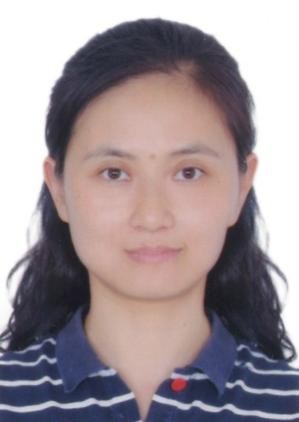
HUANG Ying received her Master of Science degree from the University of Chinese Academy of Sciences in 2009. In 2017, she conducted collaborative research on urban low-carbon development pathways as a visiting scholar at Lawrence Berkeley National Laboratory, USA. She has dedicated her career to research on energy development strategies, energy technology assessment, and regional sustainable development pathways and policies, with a particular focus on the integration of transportation and energy systems ("transportation-energy nexus"). She independently developed a dynamic energy technology-economy-environment model, which has been extensively applied at provincial, municipal, and district levels. She has led more than 20 projects funded by national, provincial, and international programs. In 2021, as a core member of the Guangzhou Carbon Peaking and Carbon Neutrality Task Force, she coordinated the city's carbon emission peak estimation and peaking pathway research, and was the principal author of Guangzhou's top-level design documents for carbon peaking and carbon neutrality. She has published over 50 academic papers, including 15 SCI/EI-indexed papers, authored 2 academic monographs, and holds 4 software copyrights.
Research Areas
· Regional Energy Transition and Low-Carbon Development Pathway Analysis
· Energy Technology-Economic Modeling Research
· Synergistic effects of greenhouse gas and air pollutant emission reduction research
Publications
1. Ying Huang, Cuiping Liao, Jingjing Zhang, Hongxu Guo, et al. Exploring potential pathways towards urban greenhouse gas peaks: A case study of Guangzhou, China. Applied Energy. 2019, 251: 113369.
2. Ying Huang, Yongli Zhang, Feifan Deng, Daiqing Zhao, Rong Wu. Impacts of Built-Environment on Carbon Dioxide Emissions from Traffic: A Systematic Literature Review. International Journal of Environmental Research and Public Health. 2022, 19,16898.
3. Ying Huang, Hongxu Guo, Zhen Liu, Cuiping Liao, Daiqing Zhao. Research on the energy transition pathways of the transportation sector in the Guangdong–Hong Kong–Macao Greater Bay Area, China. Scientific reports. 2024, 14: 20186.
4. Jiandong Jiao, Ying Huang*, Cuiping Liao. Co-benefits of reducing CO2 and air pollutant emissions in the urban transport sector: A case of Guangzhou. Energy for Sustainable Development. 2020, 59: 131-143.
5. Jiandong Jiao, Ying Huang*, Cuiping Liao, Daiqing Zhao. Sustainable development path research on urban transportation based on synergistic and cost-effective analysis: A case of Guangzhou. Sustainable Cities and Society, 2021, 71: 102950.
6. Genglin Dong, Ying Huang*, Cuiping Liao, Daiqing Zhao, Peng Wang, Changlong Sun. Analysis of the Environmental and Economic Impacts of Industrial Restructuring and Identification of Key Sectors Based on an Industrial Correlation Perspective. Sustainability, 2025, 17, 817.
7. Ying Huang, Cuiping Liao, Jiandong Jiao. Study on the Sustainable Development Path of Urban Transportation System. Beijing: China Communications Press, 2025.
8. Cuiping Liao, Daiqing Zhao, Ying Huang. Methodology for Regional Low-carbon Development Planning-A Case Study of Guangdong Province. Beijing: China Environmental Science Press, 2015.
Scientific Research
1. Hong Kong Collaborative Research Fund (CRF), C7041-21GF, Turning 2060 Carbon Neutrality into Reality: a cross-disciplinary study of air pollution and health co-benefits of climate change mitigation of the Guangdong-Hong Kong- Macau Greater Bay Area, June 2022-June 2026, Leader of project 1.
2. Zhejiang Provincial Department of Science and Technology 'Vanguard' and 'Leading Goose' R&D Program Project, 2022C03168, Regional Carbon Peak and Carbon Neutrality Research Based on Cost-Optimal and Source-Grid-Load-Storage Integration Technology, 2022-2025, Leader of project 1.
4. Guangzhou Development and Reform Commission, Research on the Compilation of Guangzhou's Carbon Peak Action Plan, 2021-2022, Project Leader.
5. International Cooperation Project, Research on Sustainable Development Path of Guangzhou Transportation System under the Dual Objectives of Carbon Peak and Air Quality Compliance, 2019-2020, Project Leader.